Dublin, CA · Garage Door Service
Opener Installation for Newark's 1970s Garage Doors
Newark homes built around 1975 often still run original chain-drive openers with no safety reversal. We install modern openers and drive the 16 miles from Dublin to do it.
- Repairs & new doors
- Springs & openers
- Serving 5 nearby communities
The Symptom
Newark's housing stock centers on 1975, and that one number explains most of the service calls we get from this side of the service area. A door built in the mid-70s almost never has its original opener replaced outright - homeowners add a remote, swap a sensor, or just live with the noise, but the motor and drive housing from the build year often stay put for decades. What you're left with is a chain-drive unit with no rolling-code security, no safety reversal that meets current standards, and a logic board that's slower every year to respond to the wall button.
The tell is usually the same: the door reverses randomly, the remote range has shrunk to a few feet, or the motor runs hot and loud before it moves the door at all. Homeowners read that as a door problem and start looking at springs or tracks. Nine times out of ten in a house from this era, it's the opener itself that's at end of life, not the hardware it's driving.
We come out from Dublin, 16 miles away, so we're not doing same-day walk-throughs on spec - if you call, tell us what the opener is doing and roughly how old the house is. That alone usually tells us what we're bringing on the truck.
Stocked Parts
For a house dating to the 1975 median here, we carry belt-drive and chain-drive openers sized for the torsion springs already on that door, plus the wall consoles, safety sensors, and battery backup units that didn't exist on the original install. We don't try to patch a 1970s logic board - once the motherboard or the drive gear goes on a unit that old, replacement is the honest answer, not a repair ticket that costs nearly as much and still leaves you with forty-year-old bearings.
The climate here runs mild with occasional freeze risk, which matters more for the opener than people expect - cold mornings are when an old motor capacitor or a dried-out chain finally gives out, so we stock the lubricant and chain tensioners suited to that swing, not just the opener box.
One honest limitation: if your garage uses a wall-mounted opener design or a wiring configuration outside what we stock on the truck, we may need to order a part before we can finish the job in one visit. We'd rather tell you that up front than leave halfway through.
How We Fix It
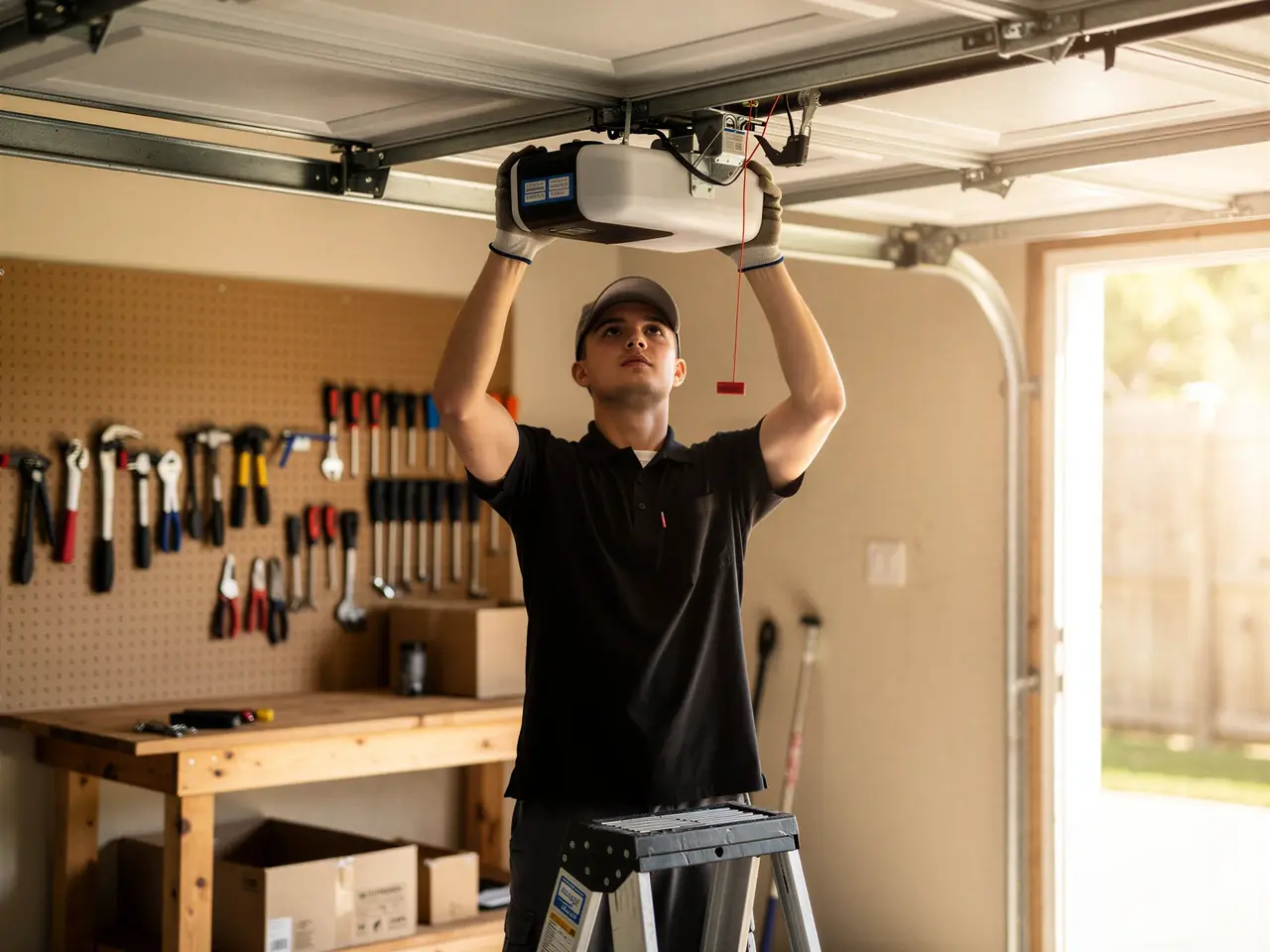
We start by pulling the existing opener and checking the rail, the springs, and the cable drums - on a house from this era those parts have usually had at least one prior repair, and we're not installing a new motor on hardware that's about to fail next. If the springs are original to 1975, we flag it; a new opener on a worn spring system just transfers the strain faster.
Installation itself is a half-day job: new rail and motor mount, rewired safety sensors at the correct height, wall console, and a battery backup if the house doesn't already have whole-home backup power. We program the remotes and any vehicle-integrated opener on site and test the auto-reverse with a 2x4 under the door edge before we call it done - that's not optional, it's the safety standard the old units never met.
Because we're driving in from Dublin, 16 miles out, we schedule opener installs as a planned appointment rather than a same-day emergency call. That's worth knowing before you book.
The Cost of This Job
We don't publish a flat number here because the job cost swings on what we find once the old opener's off the rail - a clean swap onto good springs and a sound rail costs less than a job where we're also replacing cable drums or a bent track that's been masking the opener's struggles for years. What we can tell you is how we price it: parts plus labor, quoted after we've looked at the actual unit and rail, not before.
Households in this part of the service area report a median income around $164,909, and most of the opener jobs we quote here land in a predictable range because the housing stock is fairly uniform - 1970s construction with similar door sizes and spring setups. That consistency is useful: it means fewer surprises mid-job, not a lower price guaranteed in advance.
If your opener is still under a manufacturer warranty, tell us before we start - we'll check it against what we're installing so you're not paying for coverage you already have.
Frequently asked questions
Is my original 1970s opener safe to keep running?
If your house dates to around 1975 and the opener has never been replaced, it almost certainly predates the current safety-reversal standard. We test auto-reverse on every job, and a unit from that era will usually fail that test outright. Running it isn't illegal, but it's a real risk, especially with kids or pets near the door.
Do you install the same day you come out to Newark?
No. We're based in Dublin, 16 miles from Newark, so opener installs here are scheduled appointments rather than same-day emergency visits. Call ahead with the opener's symptoms and the rough age of your house, and we'll bring the right unit on the truck.
Will a new opener work with my 1970s springs and track?
Usually yes, but we check first. A house from this era often still has original torsion springs or a track that's been patched once already. If those parts are near the end of their life, we'll say so before installing a new motor on top of them - putting a new opener on failing hardware just shortens its life.
Why does my opener act up more in winter mornings?
This area runs mild with occasional freeze mornings, and that swing is hard on an aging opener - dried-out chain lubricant and old capacitors tend to fail right when the temperature drops. If your opener struggles on cold mornings and is original to the house, that's usually your sign to replace it, not just lubricate it.
Book garage door service in Dublin
Call now or request a quote - tell us what the door is doing and where you are.