
Dublin, CA · Garage Door Service
Garage Doors on Dublin's Pre-Insulation Housing Stock
Dublin's housing dates mostly to the 1960s-70s, built before insulation codes - here's what that means for your garage door's age and repair options today.
- Repairs & new doors
- Springs & openers
- Serving 5 nearby communities
What Is Going On
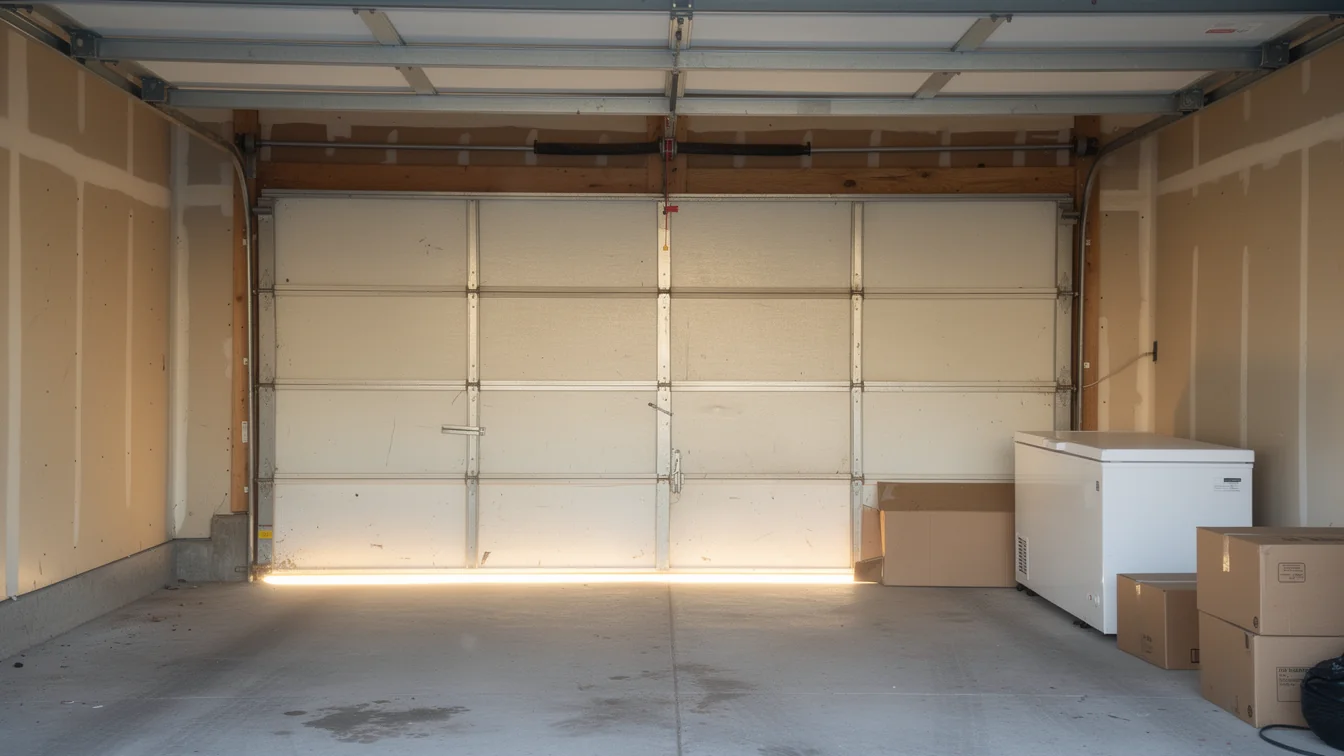
Most of Dublin's housing went up between 1938 and 2010, with the median build year landing around 1972. That one number explains a lot of the service calls we get. A door installed in 1968 or 1974 was built to a different standard than anything going up today - single layer steel or wood, no foam core, no thermal break at the bottom seal. Nobody was writing insulation codes into residential construction back then, so the door on the house matched the house: functional, not sealed.
Across the 24 named areas that make up this stretch of the valley, that 1960s-70s stock is the rule, not the exception. We see original hardware more often than not - steel tracks that have never been swapped, springs that were sized for a lighter door than what's hanging on them now after a panel replacement somewhere along the way. None of that means the door is bad. It means it was built to a spec that didn't account for heat transfer, condensation, or the kind of daily temperature swing a garage actually sees. If your door still looks original, it probably is, and that's worth knowing before you assume a rattle or a drafty seal is a defect instead of just the design.
What Changes With the Season
Dublin sits in a mild climate band with some freeze risk but nothing like the hard freeze-thaw cycle that splits seals and warps panels in colder parts of the country. That's the good news - you're not fighting ice buildup in the track every winter. The catch is that a lot of these older, uninsulated doors were never asked to manage temperature swings at all, mild or not, because insulation wasn't part of the design brief in 1972.
What you'll actually notice is condensation on the inside face of an uninsulated steel door during the cooler, damper stretches of the year, and a door that runs noticeably hotter to the touch in summer than an insulated panel would. Neither is dangerous, but both are symptoms of a door built for a different set of expectations. On the hardware side, the occasional overnight freeze risk here is mild enough that it rarely cracks a spring or seizes a track outright - it's more likely to show up as stiffness on the coldest mornings than as an actual failure. If your opener struggles on the first cold start of the day but runs fine by afternoon, that's the climate talking, not a broken part.
When It Stops Being a DIY Job
A lot of garage door maintenance is genuinely homeowner-level work: lubricating rollers, tightening loose hardware, checking the photo-eye alignment. Where it stops being that is anything involving the torsion spring or the cables under tension, full stop - that's true on any door, any age, and it's especially true on a 1960s or 70s door where the spring may have been resized once already and the mounting hardware wasn't engineered for today's heavier insulated replacement panels bolted onto an old frame.
Here's the honest limitation: if your door is original to a house built in that 1938-2010 window and the panel has warped, rusted through, or delaminated, we're often not going to recommend fighting it back to life. Parts for some of that original hardware aren't something we stock, and sourcing them takes longer than most owners want to wait. At that point replacement with a modern insulated door is usually the straighter path, not because the old door failed you, but because it was never built to the spec a repair would need to match.
How Local Conditions Play In
Median household income across this service area runs $172,226, and in practice that shows up as owners choosing full insulated replacement over patching an original panel once it starts to go - the math works for a lot of households here in a way it might not elsewhere. We see that pattern most in the stretch of houses from that 1960s-70s build wave, where the door is the last original-spec component left on the house.
The housing pattern isn't unique to one pocket. Out toward Camino Tassajara and Norris Canyon, about five miles from here, and further out past Blackhawk and Diablo, the same era of single-wall steel and wood doors shows up on the same era of house. Across 97,369 owner-occupied homes in this broader area, that's a lot of garages still running hardware sized for a lighter, uninsulated panel. None of this is exotic - it's just what you get when a region's housing stock skews to one build decade, and the garage door, more than almost any other part of the house, still shows its age.
Frequently asked questions
Is my garage door original to the house if it was built in the 1960s or 70s?
It's common here. A lot of Dublin's housing dates to that window, and plenty of original steel and wood doors are still in service, sometimes with a replaced spring or opener but the same panel and track. If you've never had it replaced, check the back of the panel for a manufacture stamp - that's the only reliable way to confirm it.
Do I need an insulated garage door in Dublin's climate?
Not strictly for weather protection - the climate here is mild with only occasional freeze risk, not the kind of cold that demands insulation to prevent cracking. The reason most owners upgrade is comfort and condensation control in an attached garage, not survival against the elements.
Why can't you just repair my original 1970s door?
Sometimes we can - rollers, cables, and openers are serviceable on almost any door. Where we stop is sourcing original single-wall steel panels or period-specific track hardware; that stock mostly isn't made anymore. If the panel itself has failed, replacement is usually faster and more reliable than a repair.
Why does my door feel stiff on cold mornings?
That's typical for older hardware in this area's mild-with-some-freeze climate - grease thickens slightly and tracks tighten a touch overnight, then loosen up as the temperature rises. It's rarely a sign of failure on its own, but if it persists past midday, have the track alignment checked.
Related garage door services in Dublin
More garage door guides
Book garage door service in Dublin
Call now or request a quote - tell us what the door is doing and where you are.