
Dublin, CA · Garage Door Service
Garage Door Maintenance for Dublin's Aging Hardware
Dublin homes built mostly in the 1960s-70s have original hardware wearing out together. Here's why maintenance matters here and what a tune-up actually involves.
- Repairs & new doors
- Springs & openers
- Serving 5 nearby communities
Why It Happens Here
Most of the housing stock across this service area went up between 1938 and 2010, with the median home dating to 1972. That means a huge share of doors still running on hardware installed when disco was popular - steel rollers instead of nylon, single-coat torsion springs rated for a shorter cycle life, hinges that have never been re-torqued. Across the 24 named areas this region covers, the pattern repeats: 1960s and 1970s tract construction, original openers swapped out once, but the track and spring assembly never touched.
The climate here sits in a mild band with occasional freeze nights, not the brutal freeze-thaw that cracks concrete aprons elsewhere, but enough temperature swing to stiffen grease in a spring that hasn't been lubricated in a decade. Add a door that cycles twice a day for fifty-plus years and you get the slow failures - a cable fraying one strand at a time, a roller bearing seizing until it screams on every open - that routine maintenance catches before they become a 2 AM call. Skipping maintenance doesn't break a door overnight. It just means the day it breaks, it breaks all the way.
How We Fix It
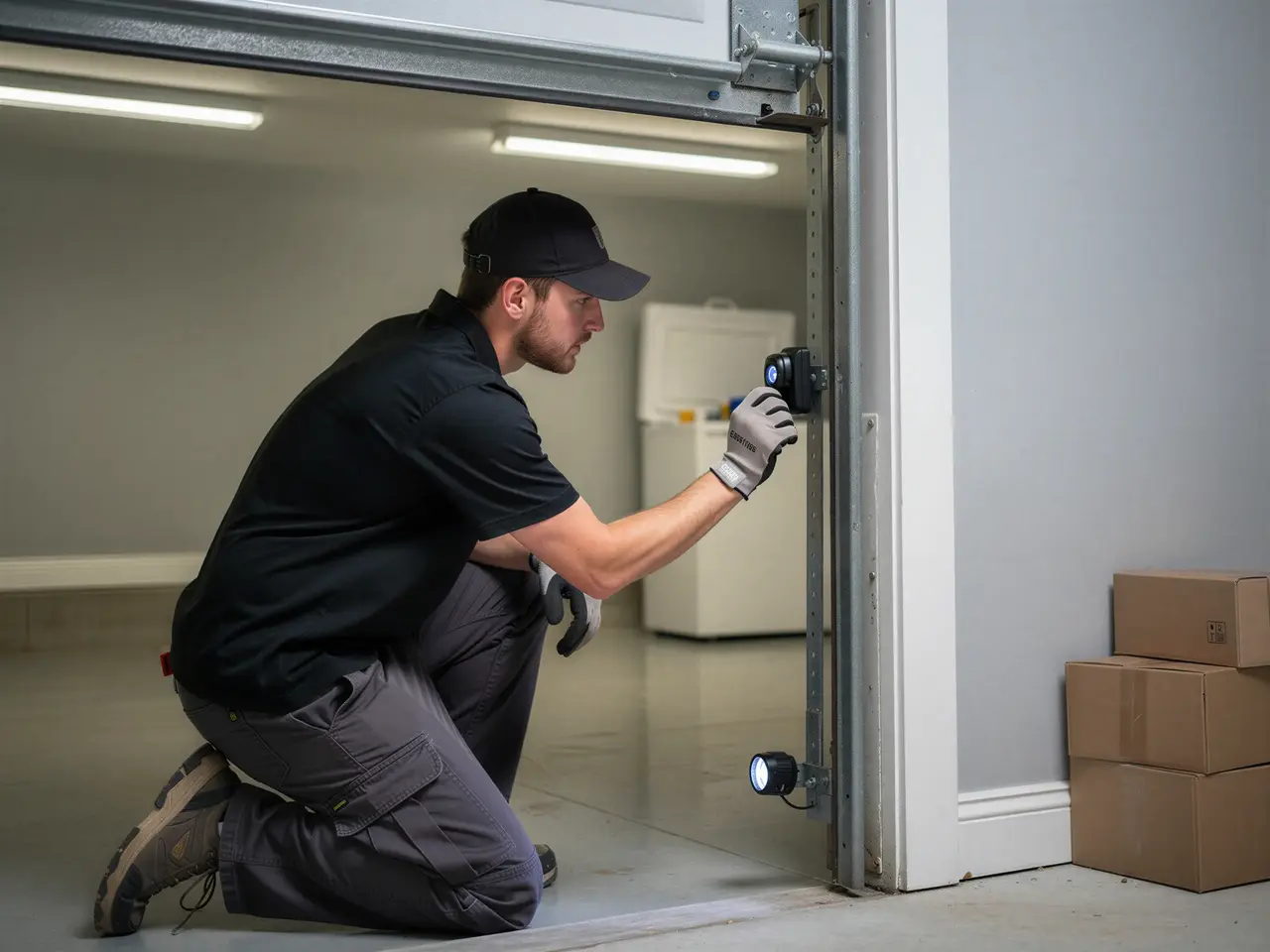
A real maintenance visit starts with the spring - checking tension, looking for gaps in the coil, and lubricating with the right grade, not WD-40, which actually strips lubricant instead of adding it. We check cable wear strand by strand, inspect roller bearings for play, and re-torque hinges that have loosened from thousands of cycles. On older torsion systems common in homes built before the 1980s, we check the winding cones and the set screws, since those are original parts that were never designed to last fifty years without inspection.
We test opener force settings and safety reversal, since a door that closes on resistance instead of stopping is a liability regardless of age. Track alignment gets checked too - on a house with original framing, decades of minor settling can throw a track out of square by a fraction that's invisible until the door starts binding.
What we don't do: we don't replace parts that aren't worn just to pad a service ticket. If a spring has life left in it, we lubricate and move on. If a cable is fraying, we'll tell you it needs replacing now, not maintenance later.
The Cost of This Job
We can't quote a maintenance price here since it depends on door size, spring count, and what the inspection turns up once we're under the door. What we can tell you is what drives the number up or down: a single door with one torsion spring costs less to service than a double door with two springs and a heavier opener. Homes built on the earlier end of the 1938-2010 range tend to carry older opener models that take longer to inspect properly, since parts and wiring aren't standardized the way newer units are.
Household income in this area runs well above the national median, and we see that reflected in what owners choose: more people here opt for the earlier, cheaper maintenance call instead of waiting for a $400+ emergency spring replacement. That's the real math behind maintenance - it's not about avoiding cost, it's about choosing which cost you pay. A tune-up now is reliably cheaper than a broken spring plus a service call on a Saturday.
The Symptom
The giveaway is almost always noise or hesitation. A door that used to lift quiet now groans at the halfway point, or it stutters before the opener finishes the job - both point to a spring losing tension or a roller binding in a track that's picked up grime over the years. On original hardware from the 1960s-70s construction wave common here, you'll also sometimes see the door hang slightly crooked when it's open, which usually means one cable has stretched more than the other.
If you're hearing a scrape instead of a groan, that's rollers, not springs - a cheaper fix if you catch it early. If the door feels heavier to lift by hand than it did a year ago, that's the spring telling you it's losing its coil tension gradually, the way they all eventually do. None of these symptoms are emergencies yet. They're the warning that comes before the emergency, and they're exactly what a maintenance visit is built to catch.
Frequently asked questions
How often should I get my garage door serviced in Dublin?
For homes in this area built in the 1960s and 70s with original hardware, once a year is reasonable. Newer doors with factory-sealed bearings can often go longer between visits. If your door is making noise it didn't make six months ago, don't wait for the annual check.
Will maintenance stop a spring from ever breaking?
No. Torsion springs have a rated cycle life and will eventually fail no matter how well they're maintained. What maintenance does is catch the warning signs - stretched cable, visible gaps in the coil - before the spring lets go without notice.
Is my door too old to bother maintaining?
Rarely. Even hardware from the earlier end of the 1938-2010 construction range can usually be serviced rather than replaced, as long as the springs and cables are intact. We'll tell you honestly if a part is past the point where lubrication helps.
By Neighborhood
Maintenance across the Dublin area
We also handle maintenance in these Dublin-area suburbs.
Book garage door service in Dublin
Call now or request a quote - tell us what the door is doing and where you are.