
Dublin, CA · Garage Door Service
Garage Door Maintenance for Orinda's 1960s Housing Stock
Orinda's garage doors mostly date to the early 1960s. We service torsion springs, rollers, and openers on that older hardware, traveling the 19 miles from Dublin.
- Repairs & new doors
- Springs & openers
- Serving 5 nearby communities
The Cost of This Job
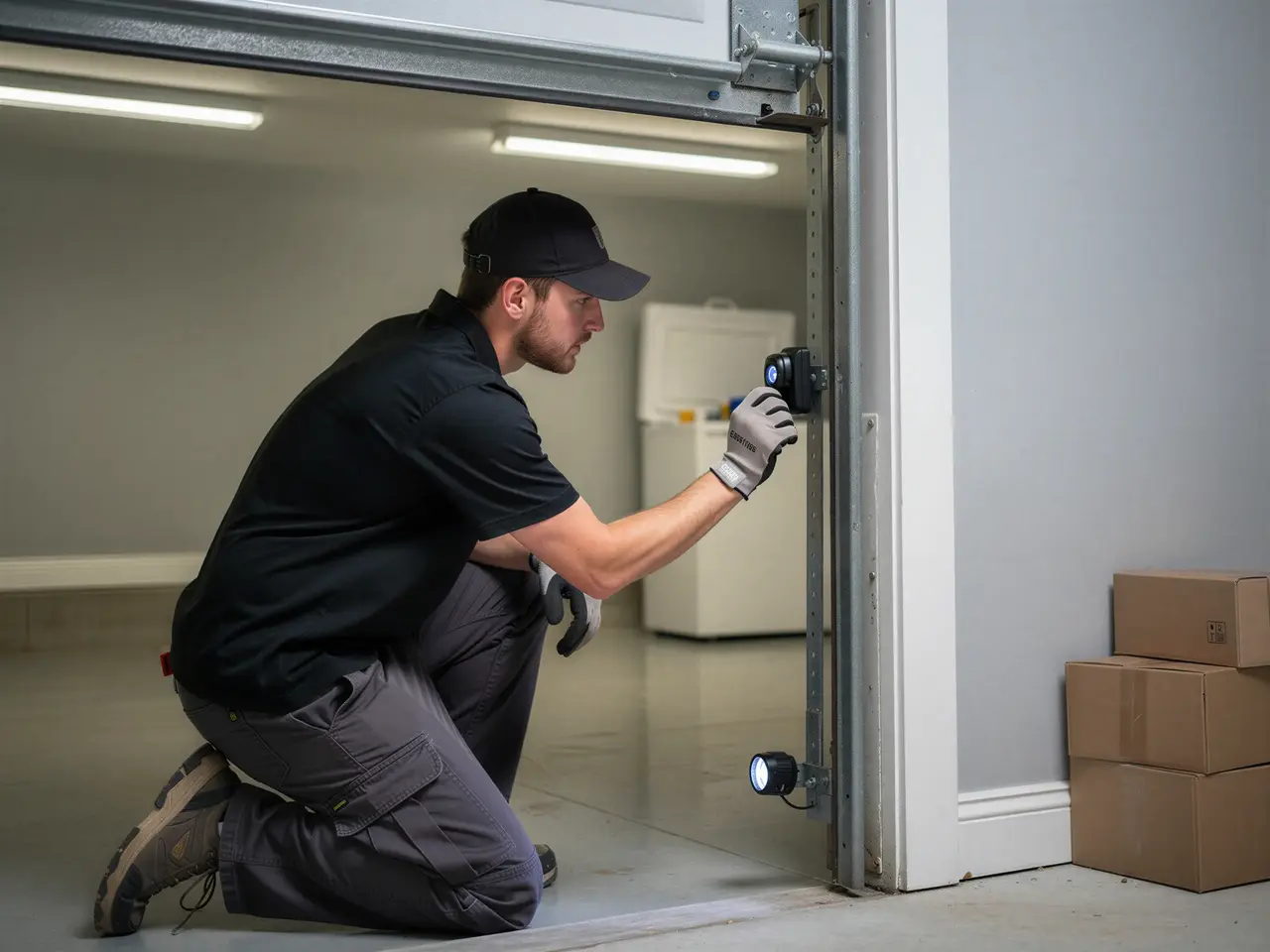
Orinda is a smaller town by household count - about 7,386 houses, not a sprawling grid like some of the places we cover from Dublin. That matters for maintenance because the fault patterns repeat: the same era of door, the same few failure points, call after call. We don't have a flat number to quote you here since every door's history is different, but a maintenance visit on an Orinda door usually means checking torsion spring tension, lubricating rollers and hinges, testing cable wear, and verifying the opener's force settings - not swapping parts unless something's actually failed. If a part does need replacing, we price that separately once we're looking at it in person. With median household income in the area around $250,001, we see more owners opt for full hardware upgrades during a maintenance visit rather than patch a spring that's close to its cycle limit - that's a choice we lay out, not one we push.
Stocked Parts
Orinda's housing stock centers on 1961, which is close to the older edge of what we see across the wider service area (median 1972, with stock running 1938 to 2010). That puts a lot of Orinda doors in the range where original torsion springs, steel rollers, and early extension-spring setups are still in place, sometimes original to the house. We carry common torsion spring sizes, standard roller and cable stock, and universal opener boards on the truck, because those cover most 1960s-era failures. What we don't carry is obsolete track hardware or discontinued panel sections for doors that haven't been made in decades - if your door needs one of those, we'll tell you straight that replacement is the better math rather than hunting a part that may take weeks to source.
The Symptom
On a door built around 1961, the symptom we hear most is a door that's gotten heavy to lift by hand, or an opener that groans and strains before it moves the door at all. That's usually a torsion spring that's lost tension over sixty years of cycles - not the opener motor failing, even though the opener gets blamed first. A close second is a door that reverses or won't close on a down-cycle, which on older systems is often a worn roller binding in a track that's shifted slightly out of square over the decades. Neither of those is an emergency, but both get worse the longer you run the door on a spring or roller that's already failing, and a stuck door with a bad spring is a real way to get hurt.
How to Book
We're based in Dublin and drive out to Orinda, about 19 miles each way, so maintenance visits here get scheduled rather than handled same-day. Tell us the year the house was built if you know it and roughly how the door's been behaving - heavy lift, slow close, noise on the way up - and we'll bring the parts that match that era instead of guessing on-site. You can see what we cover for the area on our Orinda page, and if you're after a broader rundown of maintenance service from Dublin, that's covered on our Dublin maintenance page.
Why It Happens Here
The reason Orinda doors fail in these particular ways comes down to the build year. A door installed around 1961 was engineered to the standards and materials of that decade - thinner steel on panels, torsion springs rated for a lighter duty cycle than what a modern opener puts on them, and hardware that was never meant to run forty or fifty years without a full spring replacement. The region sits in a mild climate with occasional freeze, which is gentler on hardware than a harsher climate would be, but it doesn't stop steel fatigue or roller wear - it just slows it. Combine an older torsion system with decades of regular cycling and the spring tension drifts, the rollers wear oval, and the door starts showing exactly the symptoms described above. That's less about anything owners did wrong and more about hardware built for a different era still doing the job today.
Frequently asked questions
How often should an Orinda garage door get serviced?
We don't have a fixed interval that applies to every door, since it depends on age and how often it's used. As a rule of thumb, a yearly check of spring tension, rollers, and opener settings catches most problems on 1960s-era doors before they turn into a stuck or heavy door.
Is my door's original hardware still safe to use?
Often yes, if it's been maintained. A torsion spring or roller from the early 1960s can still function fine if it's been checked and lubricated regularly. The risk comes from hardware that's never been inspected and has quietly lost tension or worn down over the decades.
Do you carry parts for older doors on the truck?
We stock common torsion spring sizes, standard rollers, and cable that cover most 1960s-era failures. We don't carry discontinued panel sections or obsolete track hardware for very old doors - if your door needs one of those, we'll tell you when replacement makes more sense than the part hunt.
Book garage door service in Dublin
Call now or request a quote - tell us what the door is doing and where you are.