
Dublin, CA · Garage Door Service
What That Noise From Your Garage Door Is Actually Telling You
Grinding, popping, or banging garage door in Dublin, CA? Here's what each noise means for the 1960s-70s stock common across this service area, and when to call.
- Repairs & new doors
- Springs & openers
- Serving 5 nearby communities
What Is Going On
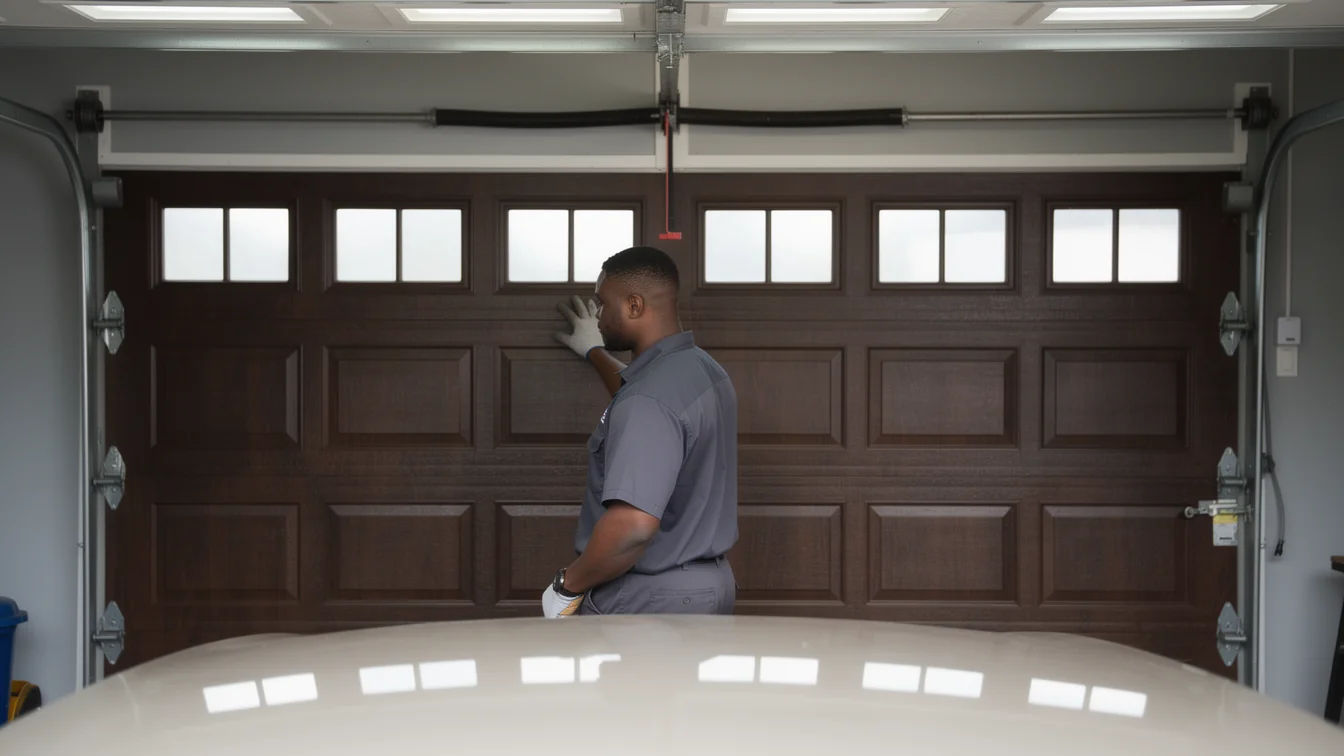
A garage door makes noise because something is rubbing, flexing, or slamming that shouldn't be. Steel rollers in worn tracks grind. A loose hinge bolt knocks. A spring losing tension bangs when the door drops the last few inches instead of easing down. None of these are mysterious once you isolate where the sound happens in the door's travel.
What's specific to this area is the age of the hardware doing the making-noise. Houses across the territory this company covers were built mostly between 1938 and 2010, with the median landing around 1972, and across the 24 named communities in this service area the bulk of the stock dates to the 1960s and 70s. That means a lot of doors out here are still running original torsion hardware, steel rollers instead of nylon, and lift cables that have never been swapped. Original hardware from that era wasn't built quiet - it was built to work, and it tells you when it's nearing the end by getting loud before it fails outright.
A squeal on the way up is usually dry rollers. A thud at the bottom of travel is often a spring that's lost tension and is letting the door free-fall the last foot. A rhythmic clack matching the door's speed points to a bent track or a roller riding on a worn section. Listen for when in the cycle the sound happens - that tells you more than how loud it is.
What Changes With the Season
This area sits in a mild climate band with occasional freeze nights rather than long hard winters. That matters more for garage doors than people expect. Lubricant that's fine in summer heat stiffens up on the cold mornings that do happen here, and steel hardware contracts slightly, which can turn a quiet roller into a squeaky one overnight without anything actually breaking.
On a 1960s or 70s door with original steel rollers, that seasonal stiffness shows up as a grinding or chirping sound that wasn't there a month earlier. It's not damage by itself, but it's often the first sign that grease has gone gummy and is holding grit against the track instead of letting the roller slide. A quick wipe and fresh lubricant on the track and hinges usually quiets it down. If the noise doesn't ease up after that, the roller itself is probably worn oval instead of round, and lubricant just won't fix a part that's lost its shape.
Springs behave the same way. A spring that's been fine all summer can sound different - tighter, more of a groan than a smooth turn - once the overnight temperature drops. That's the metal, not necessarily the spring failing. But if a spring is already near the end of its cycle life, a cold morning is often what pushes it from quiet-but-tired to actually breaking.
When It Stops Being a DIY Job
Lubricant and a tightened bolt handle a lot of the noise on these older doors. What doesn't: anything involving the torsion spring itself. Those springs are wound under real tension, and on the original hardware still common in houses built in this area's 1960s-70s wave, the winding cones and set screws are old enough that they don't release predictably. That's not a job to open up with a wrench and a Saturday afternoon - it's the one repair on this list where we tell people to call rather than try it.
A second line: if the noise is coming from the opener's motor unit rather than the door itself - a grinding or clicking from the head unit with no matching movement from the door - that's usually a gear or drive mechanism failing inside the opener, not something you lubricate your way out of.
We'll say plainly where we draw a limit: if a door's track is badly bent or the bottom section is rusted through, noise reduction isn't really the fix anymore - at that point you're paying to quiet a door that's near the end of its service life rather than extend it. Given the income levels typical in this area, most owners here choose to replace rather than keep nursing a door that's already past the point of a clean fix, and that's often the right call.
How Local Conditions Play In
This company's service area runs from close-in spots like Camino Tassajara and Norris Canyon, both about five miles out, through Blackhawk and Fairview, and farther out toward Castro Valley, Alamo, and the Lafayette-Orinda corridor. Across that stretch, the common thread for noise calls is the same: original hardware on houses from the 1938-2010 build range, concentrated in that 1960s-70s middle, finally showing its age.
Houses nearer the hills tend to have garages set at a slight grade, which puts uneven load on tracks over decades and shows up as a one-sided grinding noise rather than noise on both sides evenly. Flatter-lot houses more common toward Union City and Newark tend to wear more evenly, so a noise on just one side there is more often a single bad roller than a structural track issue.
We don't have local storm or wind data specific enough to tie noise patterns to weather events, so we're not going to invent a reason the wind did it. What we do know is the building stock, and that's usually enough to point at the actual part.
Frequently asked questions
My garage door squeals only in the morning - is that serious?
Usually not on its own. Mornings here can dip cold enough to stiffen old lubricant on steel rollers, especially on the 1960s-70s hardware common in this area. Try fresh lubricant on the rollers and track. If the squeal disappears by afternoon and comes back the next cold morning, it's seasonal. If it doesn't quiet down at all, the roller is likely worn.
Is a loud bang when the door closes a spring problem?
Often, yes. A thud at the bottom of the door's travel usually means a torsion spring has lost tension and the door is dropping the last section instead of lowering evenly. That's not a lubrication fix, and on older torsion hardware it's not a safe DIY repair either - the spring is under real tension.
Can I just lubricate everything and call it done?
On a lot of noise calls, yes, lubricant on rollers, hinges, and the track solves it. It won't fix a bent track, a worn-oval roller, or a spring near the end of its life - those show up again within weeks even after a good greasing. If the noise comes right back, it's a part, not a maintenance gap.
Related garage door services in Dublin
More garage door guides
Book garage door service in Dublin
Call now or request a quote - tell us what the door is doing and where you are.