
Dublin, CA · Garage Door Service
What a Service Call Actually Covers in Dublin
A breakdown of what a garage door service call actually involves in Dublin, CA, tied to the area's 1960s-70s housing stock and mild winter climate.
- Repairs & new doors
- Springs & openers
- Serving 5 nearby communities
What Is Going On
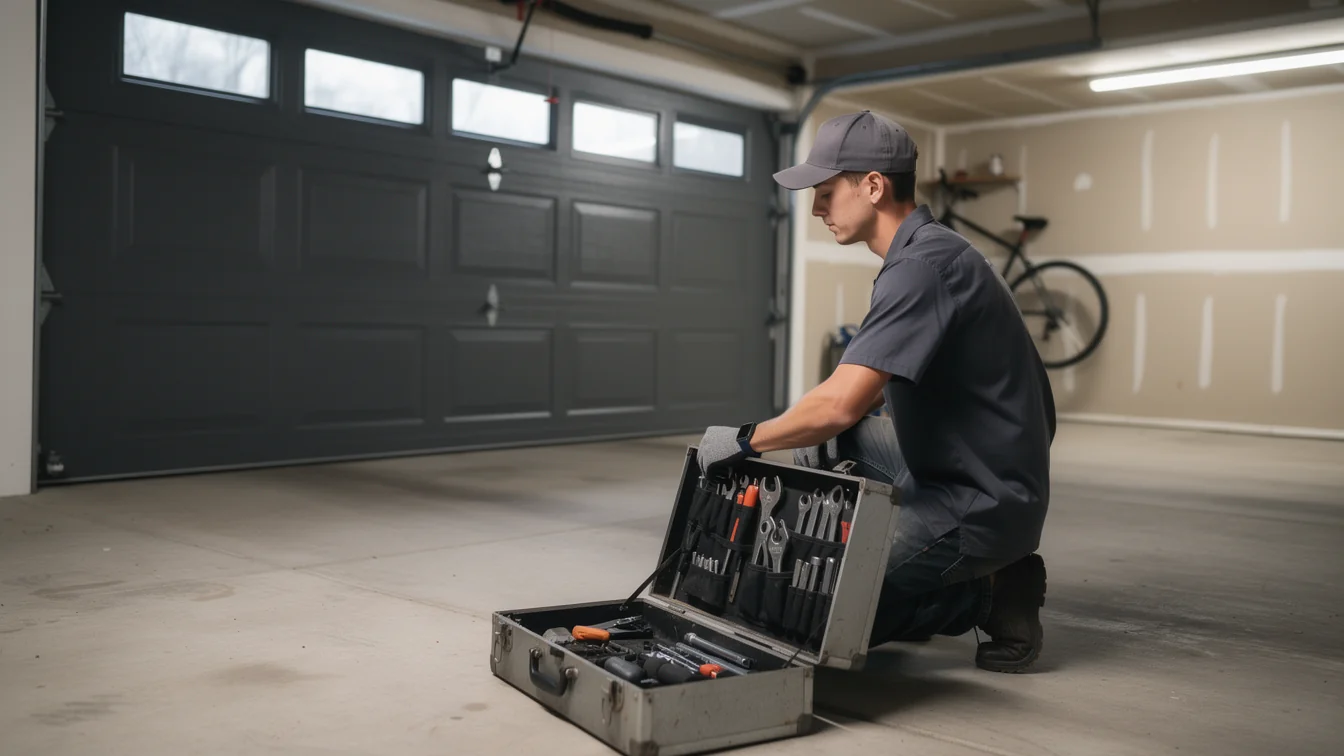
When we come out for a service call, we're not just tightening a bolt and leaving. We start by checking the door's balance, since most of the houses we work on here went up between 1938 and 2010, with the median build year sitting at 1972. That means a big share of the doors we see are either original to a 1960s or 70s build or a replacement installed on hardware from that era. We check the torsion spring wind, the track alignment, the cable condition, and whether the opener's force settings still match the door's actual weight. On a lot of these older setups, someone has swapped the opener once already but left the original track and rollers in place, which throws off how the whole system moves. A real service call means testing the door through a full cycle, not just eyeballing it shut. We also look at the panel seams and the bottom seal, since both take the most wear over decades of daily use. If something's close to failing but not failed yet, we tell you that too, because catching a cable about to fray is cheaper than replacing a door that came off its track.
What Changes With the Season
Dublin sits in a mild climate band with some freeze risk, not the deep winters that crack concrete slabs or seize steel outright. But "some freeze" still matters for a door built in the 1960s or 70s: the grease in an old bearing thickens on the colder mornings, and a spring that's a little undersized for the door starts showing it right when the temperature drops. We see more calls in the cooler months for openers that strain on the first pull of the day, which is usually the lubricant, not the motor. On the other end, the warmer stretches swell wood panels and wooden jambs on the oldest doors in the housing stock, which can bind a door that ran fine all winter. None of this is dramatic weather. It's the kind of small seasonal swing that an older torsion system feels before a newer one does, simply because the tolerances were looser when it was built.
When It Stops Being a DIY Job
A torsion spring under tension is not a DIY repair, full stop, and that's true everywhere. What makes it more likely to come up in Dublin is the housing stock: a door built when the median year here was 1972 is often still running its original spring size, sized for a lighter door than what's been bolted onto it since if panels were ever swapped. If you're hearing a loud bang and the door won't lift, don't try to release the tension yourself. Cables and tracks are a second line we won't let a homeowner touch, mainly because older track brackets in this housing stock were fastened differently than what's sold today, and reattaching one wrong puts the whole door at risk of coming down. We'll also say plainly: if a door's lift mechanism is original from a 1960s or 70s build and failing for the second time in a year, replacement usually beats another patch repair, both on cost and on safety.
How Local Conditions Play In
Across the wider service area we cover 168,551 households, with 97,369 of those owner-occupied, and the median household income sits at $172,226. That income level shows up in the calls we get: more homeowners here choose to replace an aging opener or door outright rather than keep patching a 1970s system, and more ask for insulated panels up front instead of adding them later. The housing stock itself spans 24 named areas, mostly built out in that 1960s-70s wave, which means a lot of driveways within a few miles of each other share the same spring size and track style. We're a few miles from Camino Tassajara and Norris Canyon, both inside that same five-mile radius, and the pattern holds out to Blackhawk and Castro Valley too: older torsion hardware, occasional freeze mornings, and doors due for a real look rather than another quick fix.
Frequently asked questions
How long does a typical service call take?
It depends on what we find once the door's open, but a standard inspection and adjustment on a torsion system usually runs under an hour. If we're replacing a spring or cable on the spot, plan for it to run longer, since we test the door through several cycles before we leave.
Is it normal for an older door to need more frequent service?
Yes, especially on houses built in the 1960s or 70s, which make up a large share of homes here. Original hardware wasn't built for today's heavier insulated panels, so parts wear faster than they would on a newer system.
Do you work on doors that are original to the house?
We do, and often that's most of the job. A lot of the doors we see in this area are original or close to it, built around the median construction year of 1972, and they need different parts and judgment than a door installed last year.
What if my door is beyond a simple repair?
We'll tell you honestly. If the lift system is original and has failed more than once, or the track and spring no longer match the door's weight, we'll usually recommend replacement instead of another patch, since repeated patch repairs on old hardware rarely hold.
Related garage door services in Dublin
More garage door guides
Book garage door service in Dublin
Call now or request a quote - tell us what the door is doing and where you are.