
Dublin, CA · Garage Door Service
Weather Seals and Drafts on Dublin Garage Doors
Dublin homes built mostly in the 1960s-70s have original seal channels that dry out. Here's how the mild, occasional-freeze climate wears them down and when to call.
- Repairs & new doors
- Springs & openers
- Serving 5 nearby communities
What Is Going On
Most of the garage doors we look at in this part of the East Bay sit on houses built somewhere between 1938 and 2010, with the bulk of the stock dating to the 1960s and 70s across the 24 named areas that make up this service territory. That matters for seals because the bottom astragal and the side weather stripping on a door that age were never designed to last fifty years - they were designed to last ten, maybe fifteen, before someone replaces them.
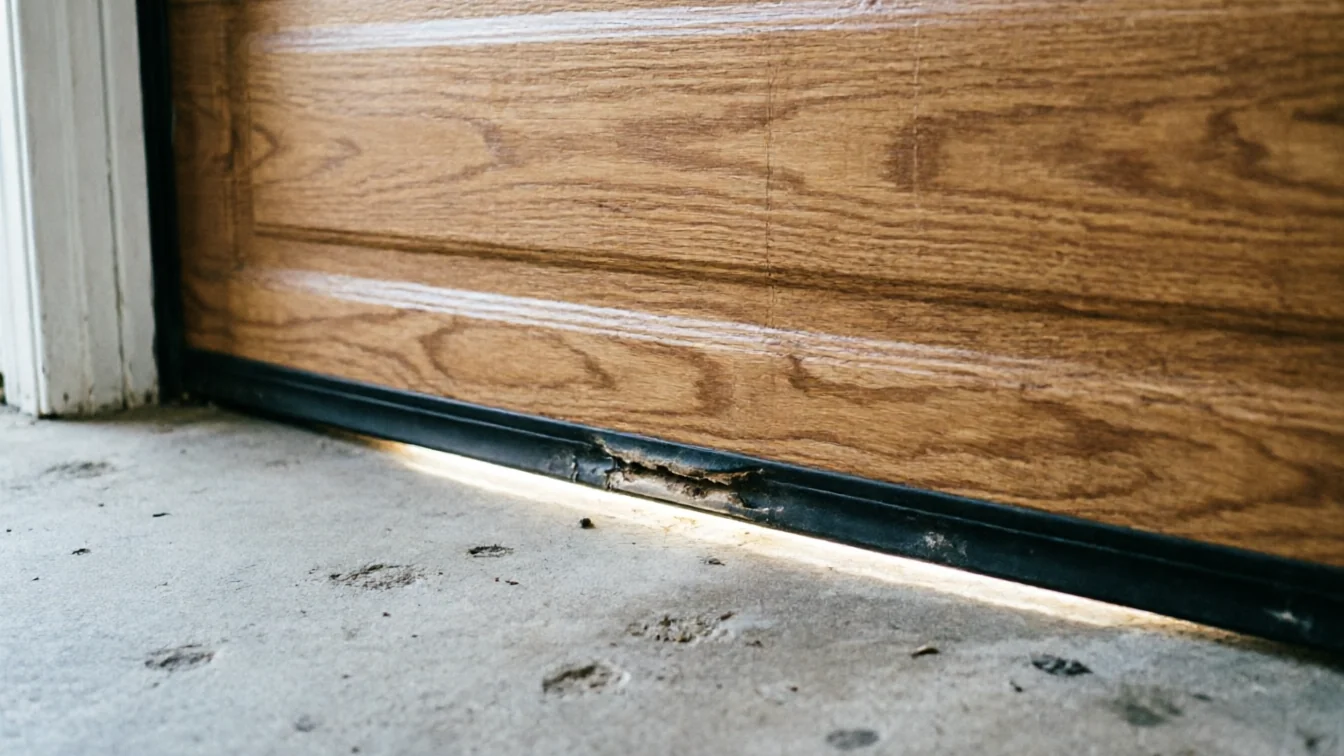
What you're usually feeling as a draft under the door, or seeing as a thin line of daylight at the bottom corners, is the rubber or vinyl seal shrinking and cracking from age and sun exposure, not a structural problem with the door itself. On a 1960s or 70s track and panel setup, the seal channel is often a style that's been superseded twice over, so matching it exactly can take a special order rather than a trip to the hardware aisle.
It's a cheap fix in material cost but it is not always a five-minute fix, because the track has to come off or the panel has to tilt out to seat a new seal correctly. Done wrong, the new seal pulls loose within a season and you're back where you started.
What Changes With the Season
This area sits in a mild climate band with occasional freeze nights rather than a hard winter, so the wear pattern on seals here is different from colder places. You don't get the freeze-thaw cracking that splits rubber in a single cold snap. What you get instead is slow UV breakdown - the seal bakes in sun through long dry stretches, loses its flex, and then on the handful of nights each year that dip near freezing, it's already brittle enough to crack at the fold.
That means the worst drafts usually show up right after one of those cold nights, even though the real damage was done months earlier by sun and heat. If you notice a new gap or a flapping seal strip the morning after a cold snap, the seal was already failing - the cold just finished the job.
Dust and pollen moving through a loose bottom seal is also a common complaint on the older panel doors around here, more so than on newer insulated models, because the gasket profile on those older panels was never as deep to begin with.
When It Stops Being a DIY Job
Swapping a bottom seal on a door with standard track is reasonable for a homeowner with basic tools, if the retainer is the common U-channel type. Where it stops being a weekend job is on the older 1960s-70s doors in this area that use a thinner, narrower retainer groove - on those, the new seal stock sold at most retailers simply won't seat, and forcing it in with adhesive or screws usually fails within a few months.
We'll be honest about the limit here: if your track and panel are original to a house built in that median-1972 range, we may need to special-order a seal profile rather than grab one off the shelf, and that adds lead time we can't shorten. It's worth asking before you assume a same-day fix.
Side seals and the top seal along the header are a different story - those involve removing trim or adjusting the door's travel, and if the door is out of square even slightly, a new seal won't close the gap no matter how many times you reseat it. That's a call-a-pro job, not because the part is hard to find, but because the alignment underneath it is doing the real work.
How Local Conditions Play In
The service area runs from Camino Tassajara and Norris Canyon about five miles out, through Blackhawk, Fairview, Sunol, and Castro Valley, and out as far as Mountain House and Piedmont at the twenty-mile mark. Housing age varies some across that stretch, but the 1960s-70s concentration holds through most of the closer-in neighborhoods, which is why seal and weather-stripping calls cluster the way they do - it's less about any one street and more about a few decades of houses hitting the same wear point at roughly the same time.
With median household income in the area over $172,000 and a largely owner-occupied housing stock, we see more owners choosing to replace an aging seal and insulation package outright rather than patch it repeatedly, once they've had to call twice in a year. That's a reasonable call on an older door - a seal fix is cheap, but a third seal fix in eighteen months usually means the track or the panel itself needs attention, not just the rubber.
Frequently asked questions
Why does my garage door only draft after a cold night, not in summer?
The seal rubber is breaking down slowly from sun exposure all year. It looks fine until a cold night makes it brittle enough to crack at the fold, so the gap seems to appear overnight even though the real wear happened months earlier.
Can I just buy a seal at the hardware store for my older door?
Sometimes. If your door still has the original 1960s-70s track, the retainer groove is often narrower than today's standard seal stock, and it won't seat properly. We may need to special-order the right profile rather than use an off-the-shelf one.
Is a drafty bottom seal a sign of a bigger problem?
Usually not on its own. But if you've replaced the same seal more than once in a year or two, the track or panel alignment underneath is likely the real issue, and a new seal alone won't fix it.
Related garage door services in Dublin
More garage door guides
Book garage door service in Dublin
Call now or request a quote - tell us what the door is doing and where you are.