Dublin, CA · Garage Door Service
Garage Door Repair for Newark's 1970s-Era Doors
Newark homes mostly date to 1975, which means extension-spring hardware and original steel panels. We drive the 16 miles from Dublin to fix what that era built.
- Repairs & new doors
- Springs & openers
- Serving 5 nearby communities
The Symptom
Most houses in Newark went up around 1975, a few years past the wider service area's 1972 median, and that single fact tells you most of what breaks. Builders in the mid-70s were putting up steel sectional doors on extension springs mounted along the horizontal track, not the torsion bars that came standard later. So the symptom we hear most from Newark callers isn't a dead opener - it's a door that slams down the last foot of travel, or one that's suddenly heavy to lift by hand. That's a stretched or snapped extension spring, and on a door this age the cable drums and pulleys that ride with it are usually just as tired. A second common call: panels that bow or warp on the sun-facing side. Original steel panels from this era were rarely insulated, and fifty years of Bay Area sun does what fifty years of sun does. Openers are the third pattern - chain-drive units from a decade or two back finally give out, and the mounting bracket underneath has often been patched more than once already.
We don't guess at this from Dublin. We ask what the door sounds like, how old the house is, and whether the spring is overhead or on the side before we load the truck.
Stocked Parts
Because the extension-spring, non-insulated-panel combination is common across Newark's housing stock, we keep the parts for it on the truck rather than ordering after we've already diagnosed the job on-site. That means standard-length extension springs in the common cycle ratings, cable and pulley sets sized for side-mount track, and steel roller and hinge hardware that matches 1970s sectional doors. We also carry universal torsion conversion kits, because a fair number of Newark owners choose to upgrade off extension springs entirely once we're already there - it's quieter and safer long-term, even though it's a bigger job than a straight spring swap.
Where we come up short is obsolete trim pieces and discontinued panel profiles - if a specific original panel from a door that's no longer made has cracked, we may need to special-order it or talk you through a full panel-section replacement instead of a true match. We'll tell you straight when that's the case rather than stall the job pretending a part is coming.
How We Fix It
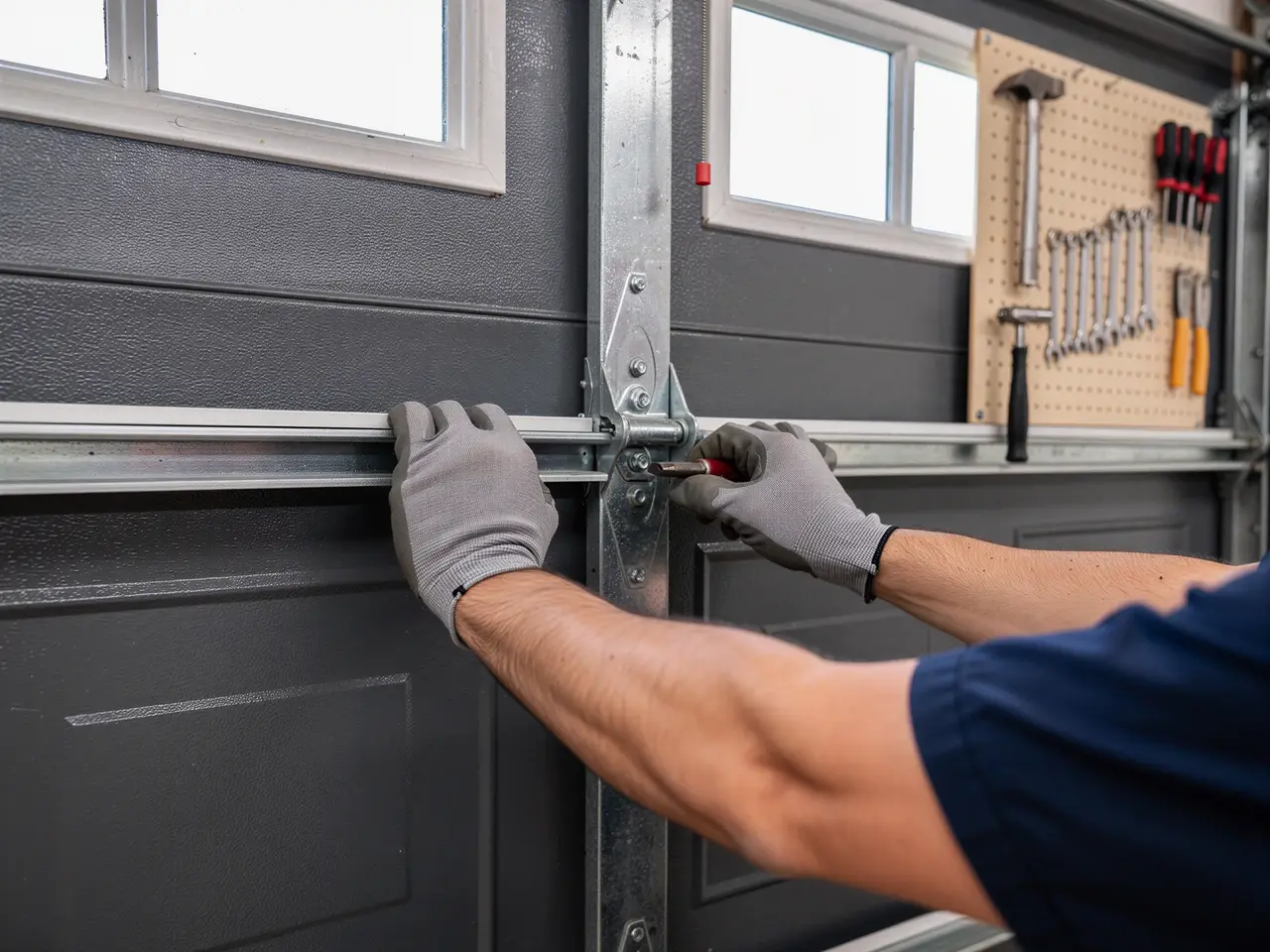
For the extension-spring failures that are typical here, the job is a direct swap: release tension safely, pull the broken or stretched spring, replace cable and pulleys if they're worn, and set the new spring to match the door's weight. On a two-car door that's usually a pair of springs, not one, since both sides load evenly or the door racks sideways.
For panel warp, we check first whether it's cosmetic or structural - a bowed panel that still tracks straight can sometimes run for years, but one that's binding against the track needs the section replaced, or in some cases the whole door, if the original profile isn't available anymore.
Opener failures on original 1970s mounting brackets usually mean reinforcing or replacing the header bracket before the new opener goes up, since the house framing back there wasn't built expecting the weight of a modern unit. We travel the 16 miles from Dublin to do all of this on-site; it's not a same-day guarantee, since route and spring stock on the truck that day both matter, but it is one visit, one diagnosis, one fix.
The Cost of This Job
Newark's median household income runs around $164,909, below the $172,226 median across our wider coverage area, and in practice that shapes which jobs get done as a repair versus a full replacement. A straight extension-spring swap with new cable and pulleys is the cheaper end of this work. Converting to torsion hardware costs more up front but tends to be the better long-term call on a door that's already fifty years old, since you're not just buying a part, you're buying a reason to stop touching the rest of the worn hardware for another decade.
Panel and opener work vary more, since a warped panel might be a single section or might mean the whole door no longer matches available stock. We won't quote a number sight unseen - a phone description of "it's heavy" could be a frayed cable about to snap or a spring that let go weeks ago. We price it once we've looked at the actual door, and we'll tell you when a repair isn't worth it against a plain replacement.
Frequently asked questions
Why does my Newark garage door feel so heavy to lift by hand?
On a house from the mid-1970s, that's almost always an extension spring that's stretched out or broken on one side. These doors use springs mounted along the horizontal track rather than the torsion bar found on newer installs, and once one side loses tension the door racks and feels twice as heavy. It's a same-visit fix once we're there.
Do you have a branch in Newark?
No. We're based in Dublin and drive out to Newark, about 16 miles each way, to do the work on-site. There's no local depot, so scheduling depends on the day's route rather than a fixed response window.
Is it worth replacing an original 1970s door instead of repairing it?
Depends on the door. If the panels are sound and it's just hardware - springs, cable, rollers - repair is the cheaper, sensible move. If the panels are warped or cracked and the original profile is no longer made, replacement often ends up cheaper than chasing discontinued parts.
Can you convert my old extension-spring door to torsion?
Yes, we carry universal torsion conversion kits on the truck. It's a bigger job than a spring swap and costs more up front, but it's quieter and typically more reliable long-term on a door this age, and we can often do it the same visit we're already there for a repair.
Book garage door service in Dublin
Call now or request a quote - tell us what the door is doing and where you are.